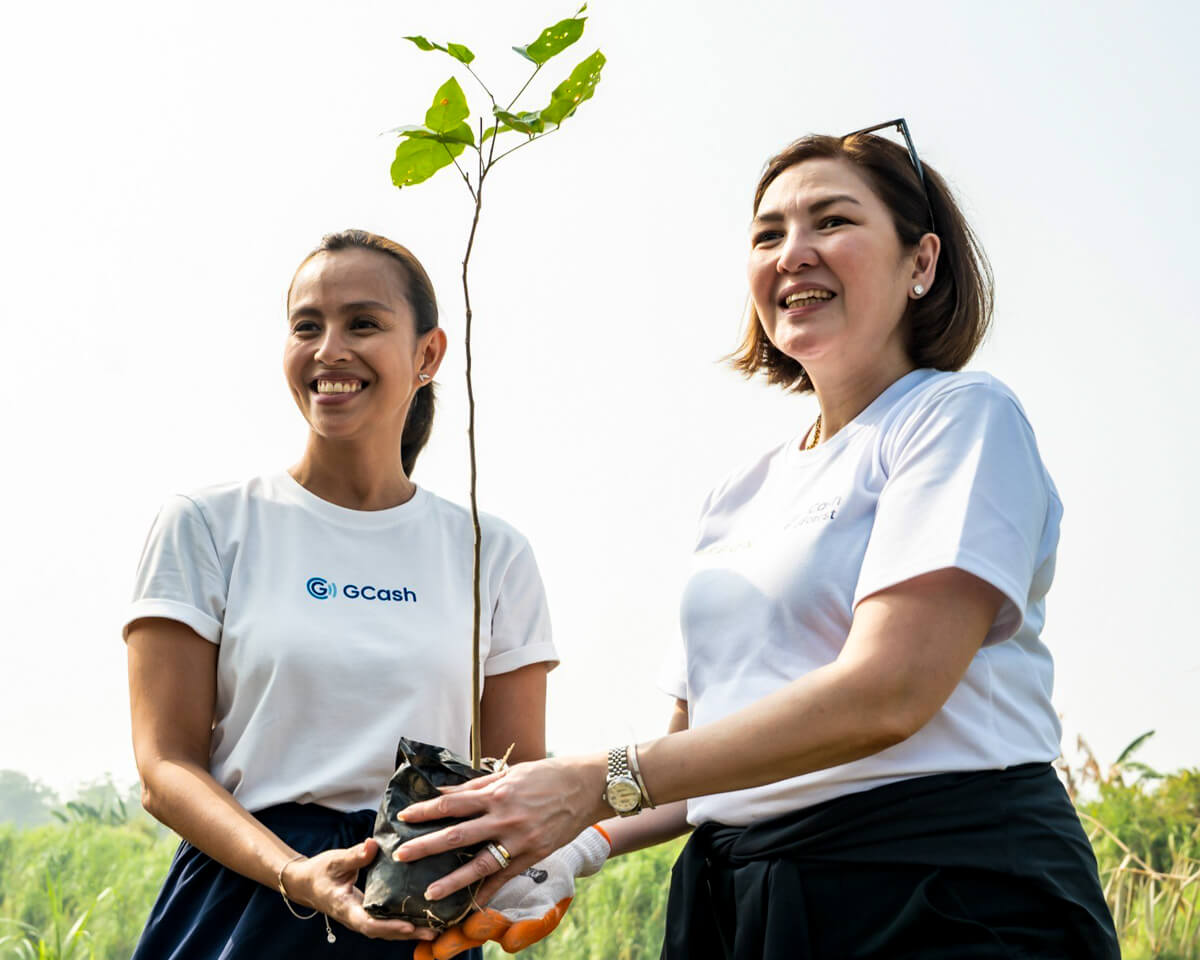
More than 3,000 volunteers gathered in Balamban, Cebu as Aboitiz Foundation and GCash brought their five-year forest restoration partnership to the ground through tree and bamboo planting.
The activity marked the first major on-ground activation of Aboitiz Foundation’s CarbonPH and GCash GForest partnership. The initiative aims to grow one million trees and help restore 1,200 hectares in Balamban over five years.
Held in time for World Bamboo Day, the initiative brought together communities, partners and volunteers across identified restoration areas. The environmental effort also extended to coastal areas. In parallel, the Municipality of Balamban led coastal cleanup activities for International Coastal Cleanup Day, extending the day’s environmental action from the uplands to the coast.
For Aboitiz Foundation president Ginggay Hontiveros-Malvar, the launch is the start of a much longer restoration journey rooted in community stewardship.
“What we are starting in Balamban is not a one-day planting activity. It is the beginning of years of work with communities to restore forests, protect water sources and create livelihoods that can endure. CarbonPH is about making sure the trees we plant today become part of healthier ecosystems and stronger communities tomorrow.”
CarbonPH and GCash GForest Partnership
The partnership between Aboitiz and GCash is part of CarbonPH, Aboitiz Foundation’s 40-year commitment to restore Cebu’s forests and watersheds at scale. The program aims to restore around 71,000 hectares and grow millions of trees, bringing together communities, government and businesses for long-term nature-based climate action.
The Balamban initiative provides a major on-ground component of this broader restoration commitment. Over five years, the partnership aims to grow one million trees and help restore 1,200 hectares in Balamban. The effort brings together volunteers, communities, government partners and businesses around long-term forest and watershed restoration.
That scale of restoration depends on partnerships. The initiative is supported by the Municipality of Balamban and the Cebu Bamboo Industry Development Council, with guidance from national government institutions that help connect restoration on the ground with the country’s broader environmental and climate goals.
The Department of Environment and Natural Resources-Forest Management Bureau (DENR-FMB) provides the broader technical and policy framework for sustainable forest and watershed management, grounded in science, good forest governance and collaboration among government, communities and other stakeholders.
The Climate Change Commission (CCC), meanwhile, helps align climate action with the Philippines’ commitments under the Paris Agreement, including the country’s Nationally Determined Contribution (NDC). The current NDC commits the Philippines to a 75% projected cumulative reduction and avoidance of greenhouse gas emissions from 2020 to 2030, with implementation requiring coordinated action across government, business and society.
Turning Digital Participation Into On-Ground Restoration
Within this larger effort, the initiative connects Aboitiz Foundation’s long-term restoration work with GCash’s digital platform. It turns green energy points earned through everyday digital activities into support for tree and bamboo planting on the ground.
Michelle Fernandez, Mynt head of corporate sustainability and communications, said the partnership makes that connection more tangible for GCash GForest users.
“GCash GForest was designed to make climate action accessible in everyday life. What this partnership does is connect that participation to something people can see taking shape on the ground—from seedlings being planted to landscapes being restored together with communities in Cebu.”
GCash GForest has helped plant 4.9 million actual trees to date. The one million trees targeted in Balamban will contribute to the GCash goal of planting 10 million actual trees by 2030, while advancing CarbonPH’s larger restoration commitment.
The partnership therefore links digital participation with physical restoration activities in Balamban. Green energy points earned through everyday digital activities support tree and bamboo planting, creating a direct connection between GCash GForest participation and restoration work carried out with communities in Cebu.
Ridge-to-Reef Restoration and Native Species
On the ground, the partnership follows a ridge-to-reef and mosaic landscape approach. The strategy integrates forest and watershed restoration, biodiversity conservation, agroforestry, mangrove restoration in coastal areas, and community participation.
Native and endemic species such as Cebu Cinnamon (Cinnamomum mercadoi), locally known as Kaningag, Narra, Molave, Katmon, Almaciga, and Bagilumbang will be planted alongside bamboo and suitable fruit-bearing and agroforestry species, including cacao, coffee, and jackfruit.
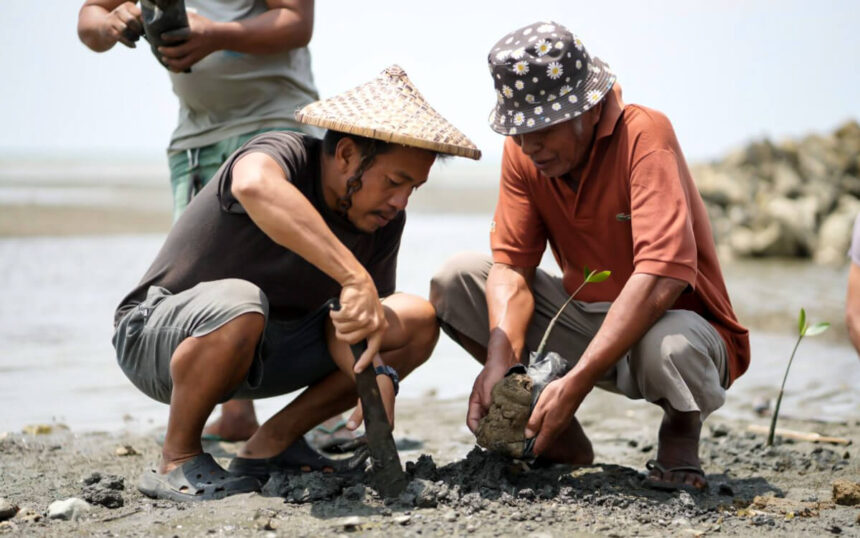
In coastal areas, mangroves will be planted and restored to help protect shorelines, strengthen coastal ecosystems, and support community resilience. This approach extends restoration beyond forest areas and connects upland and coastal environmental action within the larger Balamban initiative.
Bamboo and native trees were planted along the river corridor to help rehabilitate the watershed, stabilize riverbanks, reduce erosion and support natural flood mitigation. The activity demonstrates how forest and watershed restoration can also strengthen disaster resilience and community-based climate action.
The combination of native trees, bamboo, agroforestry species and mangroves reflects the initiative’s broader landscape approach. Restoration activities cover identified areas from the uplands to the coast, while community participation remains part of the long-term effort.
Long-Term Tree Survival and Community Stewardship
But planting is only the first step. The project targets at least 85% tree survival, backed by sustained maintenance, monitoring, protection and community stewardship.
The survival target places continued care at the center of the five-year initiative. Maintenance, monitoring and protection will support the trees beyond the initial planting activities, while community stewardship remains an important part of the restoration effort.
And Balamban is only the beginning. Over the next five years, CarbonPH will reach more communities and restoration areas.
Beyond the partnership, that work feeds into CarbonPH’s 40-year effort to restore Cebu’s landscapes. The long-term program aims to bring more communities, more partners and more areas into a sustained effort focused on healthier forests, stronger watersheds and greater climate resilience.
The Balamban activation represents the first major on-ground activity of the Aboitiz Foundation CarbonPH and GCash GForest partnership. With one million trees targeted across five years, the initiative combines tree and bamboo planting, watershed rehabilitation, biodiversity conservation, agroforestry, mangrove restoration and community participation.
Through continued maintenance, monitoring, protection and stewardship, the partnership aims to support at least 85% tree survival while expanding restoration work across more communities and areas in the years ahead.